Introduction
Choosing the right soil is one of the most important factors when growing tomatoes in containers. Many beginners fail not because of watering or sunlight—but because they use the wrong type of soil.
Tomatoes need a well-balanced environment where roots can breathe, absorb nutrients, and drain excess water properly. In containers, soil quality matters even more than in traditional gardening.
In this guide, you’ll learn exactly what kind of soil tomatoes need, how to create the perfect mix, and what mistakes to avoid.
Why Soil Matters for Tomatoes in Pots
Unlike garden beds, containers limit root space. This means:
- Poor soil = poor growth
- Bad drainage = root rot
- Low nutrients = weak plants
Tomatoes are heavy feeders and need nutrient-rich soil to produce healthy fruits.
👉 If you haven’t read the full setup yet, check this guide:
How to Grow Tomatoes in Pots (Beginner Guide)
What Is the Best Soil for Tomatoes?
The ideal soil for tomatoes in containers should be:
✅ Well-draining
Prevents water from sitting in the roots
✅ Nutrient-rich
Supports fruit production
✅ Lightweight
Allows roots to expand easily
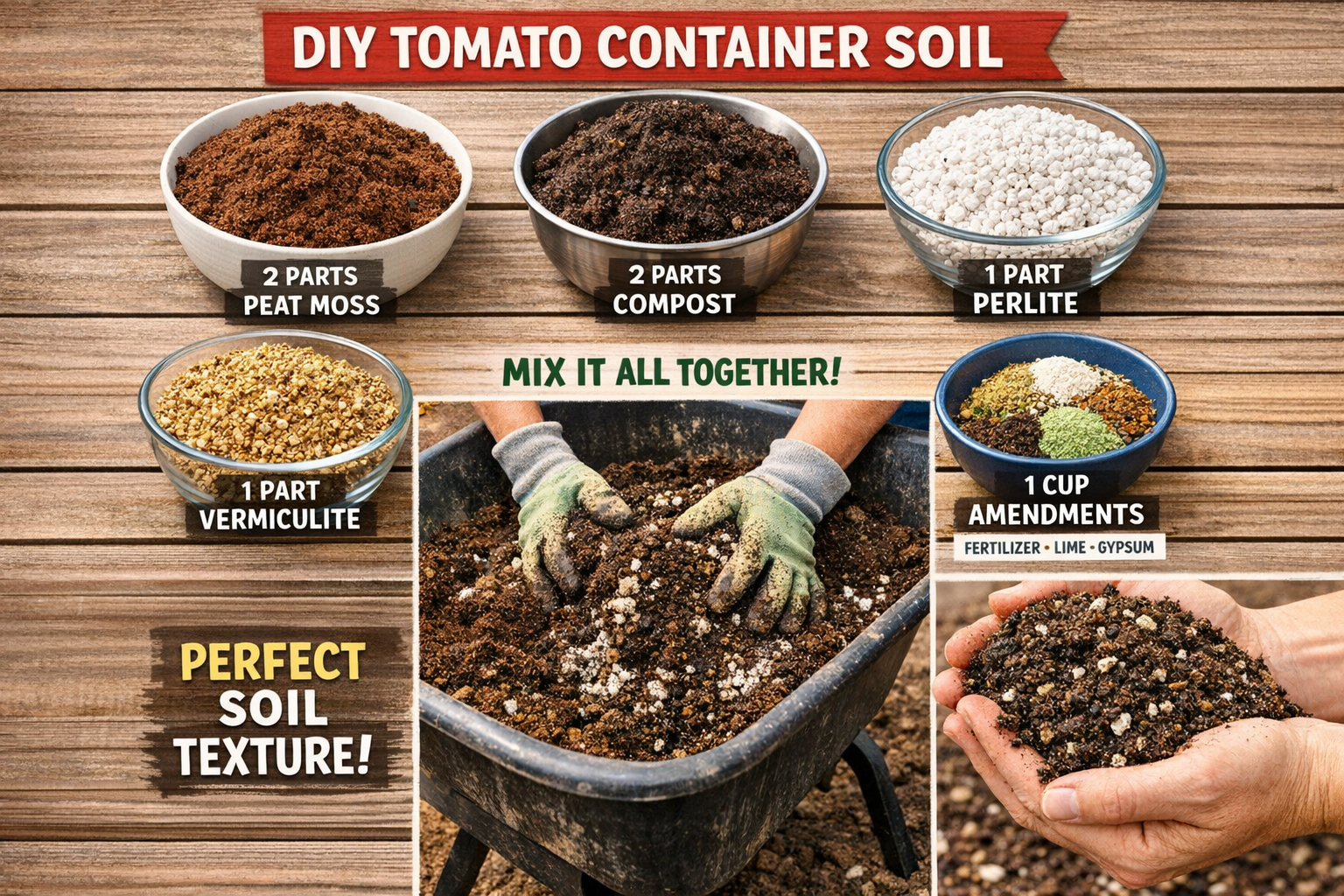
Perfect Soil Mix (Recommended Formula)
Use this simple mix:
- 70% potting mix
- 30% compost
Optional (highly recommended):
- Add 10–20% perlite or cocopeat for better aeration
This combination ensures:
- Good drainage
- Strong root development
- Balanced moisture
Why You Should NOT Use Garden Soil
Many beginners make this mistake.
❌ Garden soil problems:
- Too heavy
- Poor drainage
- Can contain pests or diseases
In containers, this leads to:
- Root rot
- Slow growth
- Low yield
Signs Your Soil Is Bad
Watch for these warning signs:
- Water stays too long in the pot
- Soil becomes hard and compact
- Plant growth is slow
- Leaves turn yellow
👉 If your leaves are turning yellow, read this:
Why Tomato Leaves Turn Yellow
How to Improve Soil Quality
If your soil is not ideal, fix it by:
- Adding compost (for nutrients)
- Adding perlite (for drainage)
- Replacing soil every growing season
Soil Maintenance Tips
- Refresh top soil every 2–3 weeks
- Avoid overwatering
- Use mulch to retain moisture
👉 Proper watering is just as important:
How Often to Water Tomato Plants
Common Mistakes to Avoid
- Using cheap low-quality soil
- Not adding compost
- Overpacking soil in the container
- Ignoring drainage holes
FAQ
Can I reuse soil for tomatoes?
Yes, but you should refresh it with compost.
What pH is best for tomatoes?
Slightly acidic (6.0–6.8)
Conclusion
Good soil is the foundation of successful tomato growing. With the right mix, your plants will grow faster, healthier, and produce more fruit.